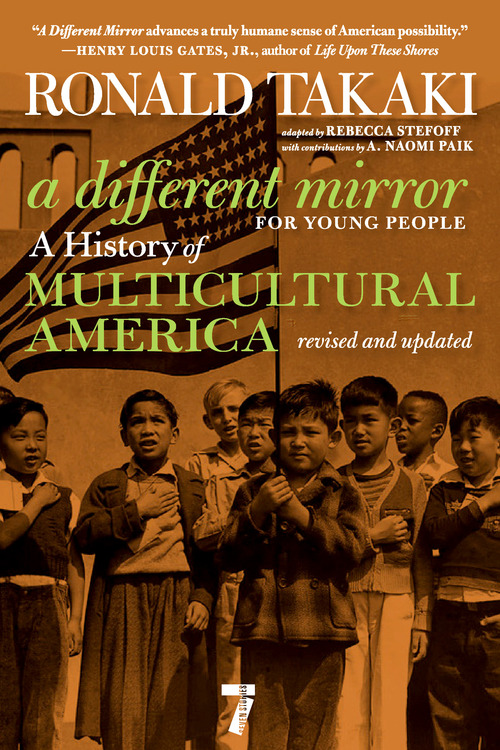
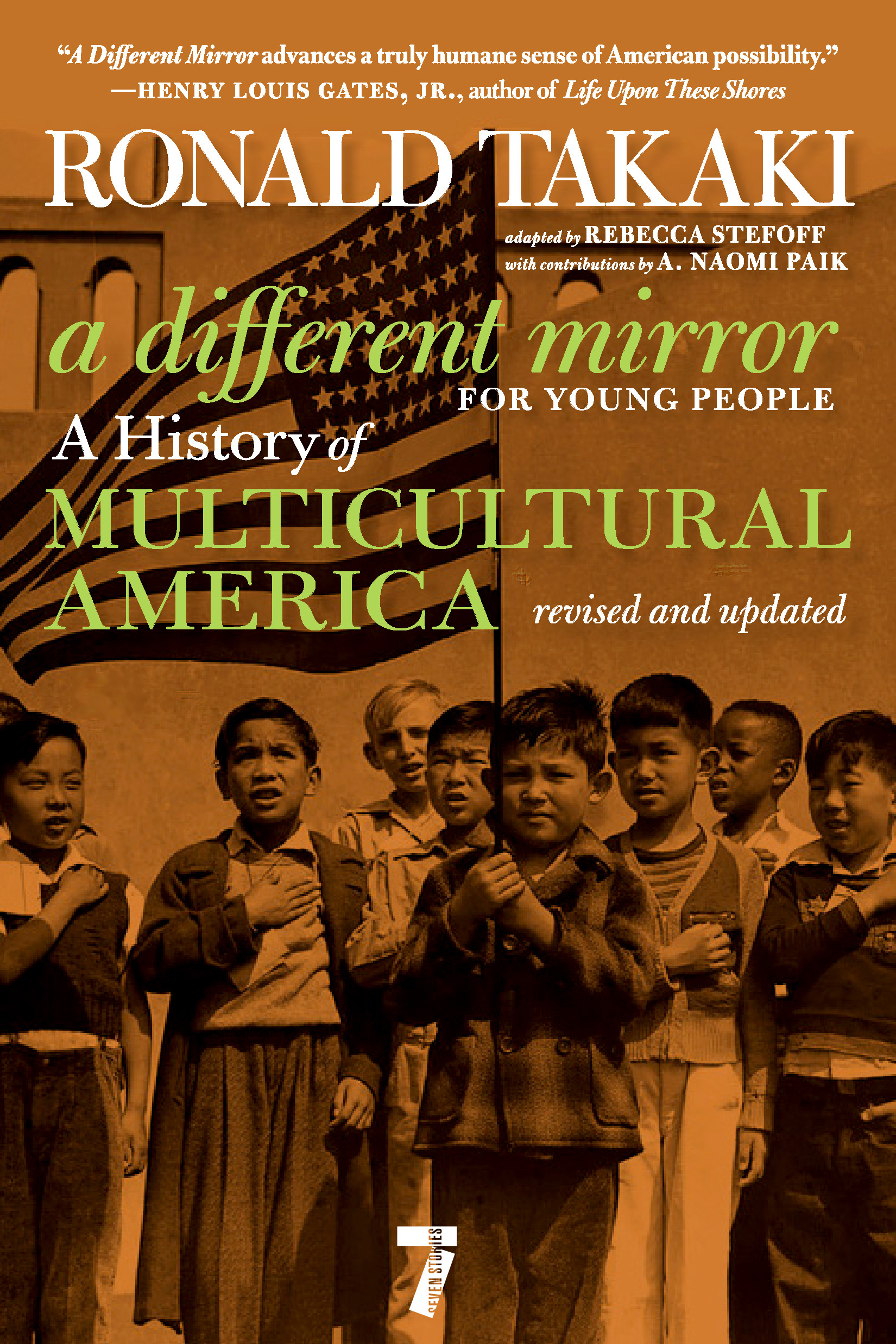
The groundbreaking multicultural history of America, adapted for younger readers, now in a revised and updated edition with 100 pages of new material.
“An excellent way to include multi-ethnic materials in the classroom as a way to ensure that your students see their unique identities reflected in their coursework.” —Skipping Stones
With a new chapter and revisions throughout, University of Illinois professor A. Naomi Paik brings this “brilliant revisionist history” (Publishers Weekly) into the 21st century. The new material examines growing inequality in the U.S., the intensifying War on Terror that further targets and marginalizes immigrants, and, in the uplifting spirit of the original book, the emergence of social movements including land and water protections and migrant justice movements.
In Ronald Takaki's multicultural masterwork, the story of America includes the Native, African, Irish, Jewish, Asian, and Latino people—and many more—who made America their home, and who often fought for rights now enjoyed by all. A Different Mirror for Young People is widely hailed as the most important resource to “teach [Americans] to value the nation's inescapable diversity" (New York Times Book Review) and has been adopted into middle and high school curricula around the country.
Drawing on Takaki's vast array of primary sources, and staying true to his own words whenever possible, A Different Mirror for Young People brings ethnic history alive through the words of people, including teenagers, who recorded their experiences in letters, diaries, and poems. Like Howard Zinn's A People's History, another title in the For Young People series, Takaki's A Different Mirror offers a rich and rewarding "people's view" perspective on the American story.
"The 'mirror' that Ronald Takaki holds up to the United States reflects a multicultural history of oppression and exploitation, but also struggle, solidarity, and community. In the most profound sense, this is a people's history of our country. Takaki shows what has torn us apart, yet what knits us together." —Bill Bigelow, curriculum editor, Rethinking Schools, and co-director, Zinn Education Project

Ronald Takaki (1939–2009) is recognized as one of the foremost scholars of American ethnic history. Born and raised in Oahu, Hawaii, the descendent of Japanese immigrant field workers, Takaki became the first member of his family to receive higher education, attending The College of Wooster in Wooster, Ohio, and later receiving a doctorate in history from the University of California, Berkeley. Takaki has said that he was “born intellectually and politically” during this period in Berkeley in the 1960s. His PhD dissertation was on the subject of slavery in America, and he went on to teach the first black history course at the University of California, Los Angeles, in the aftermath of the Watts riots. Returning to Berkeley, Takaki helped found the nation’s first ethnic studies department and rose to national prominence publishing works on the history of immigration and the understanding of ethnicity in the Americas. His 1989 title Strangers from a Different Shore: A History of Asian Americans was nominated for a Pulitzer Prize. Takaki died in 2009.

Rebecca Stefoff has devoted her career to writing nonfiction books for young readers. Her publications include histories, literary biographies, an encyclopedia of maps, and numerous books on science and environmental issues. She has also adapted a number of landmark works in history and science, include Howard Zinn's A People's History of the United States, Jared Diamond's The Third Chimpanzee, Charles C. Mann's bestselling 1493, Jill Jonnes's Eiffel's Tower, and Ronald Takaki's A Different Mirror for Young People: A History of Multicultural America.