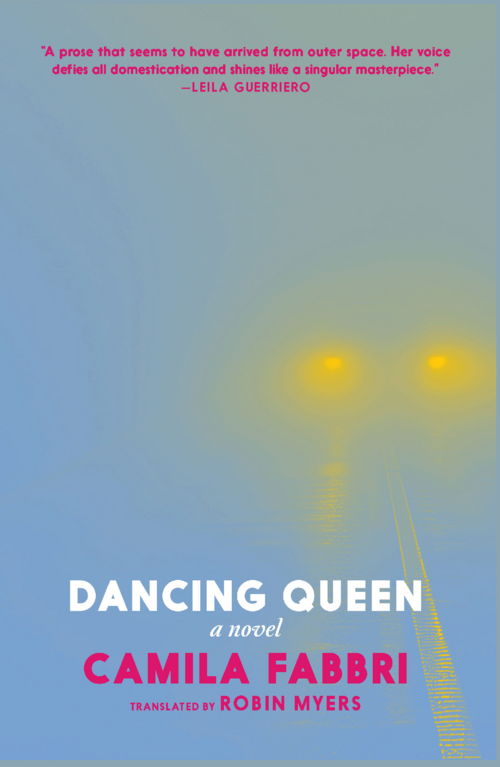
In this brutally funny debut novel, the young, award-winning Argentine writer and director Camila Fabbri lays bare the lies a woman tells herself to excuse herself from truly living.
"A story about a break-up and an existential crisis: Is it possible to save oneself from oneself? . . . Dancing Queen portrays instability, what is fleeting and ungraspable, as a treasure that may make life worth living.” —Juan Pablo Villalobos, author of I’ll Sell You a Dog
Paulina Almada awakes amnesiac beside a wailing teenage girl in a totaled car. In retrospect, she recounts her descent into an existential crisis that makes this near-death experience her redemption. The bitter cynicism or stark lucidity that veils her fear of abandonment has made her so cruel that she risks losing her boyfriend, Felipe, and her only friend, Maite. After Felipe breaks up with her, Paulina and Maite set out on a road trip. “The fake Thelma and Louise, manless runaways without style or courage,” she reflects sullenly. Willed and accidental misadventures ensue, including crashing a quinceañera, which threaten to irrevocably alter her experience of the everyday. When we finally witness the collision, it’s clear that all bonds, and life itself, are meaningful because they are temporary.
“Who is—what is—Camila Fabbri? A mind-blowing, mind-blown next-door Emily Brontë? A secret language spoken and written to be learned by reading her and shivering? David Lynch’s best friend? An alien entity taking Polaroids of what was always there but invisible to us until Fabbri arrived? Who knows? But I’m sure of one thing: It’s been a long time since I met someone or something like this, and it’s going to be a long time before I meet something or someone like Fabbri again. I can’t get over it. I don’t want to get over it. Now you try; I dare you.”
—Rodrigo Fresán, author of Melvill
Collected in
New and Forthcoming Books from Seven Stories PressOther books we recommend



CAMILA FABBRI is an Argentine writer, director, and actress. The author of the story collections Los accidentes and Estamos a salvo, the novel Dancing Queen, and several plays, she was recently included in Granta 155: The Best of Young Spanish-Language Novelists. Fabbri also wrote and directed the feature film, Clara Gets Lost in the Woods, which premiered at the 2023 San Sebastián International Film Festival.
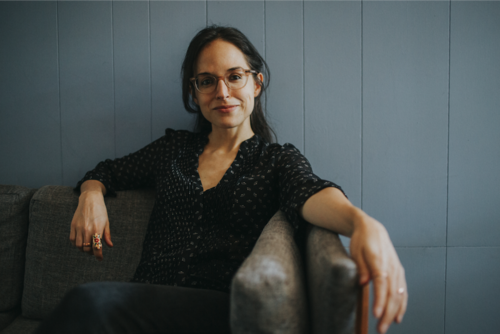
Robin Myers is a poet and translator. She won the 2025 National Book Award in Translated Literature for We Are Green and Trembling by Gabriela Cabezón Cámara (New Directions). Her poetry collection Centro is forthcoming from Coffee House Press.