










October 14
Announcing Two New Books by Annie Ernaux
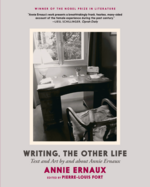
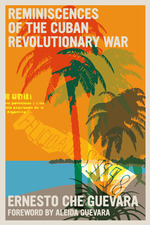
Hotel Casanova & Other Brief Texts, the first-ever collection of her short stories and essays, and Writing, The Other Life: Text and Art by and About Annie Ernaux, a gigantic compendium of unpublished work, edited by Pierre-Louis Fort
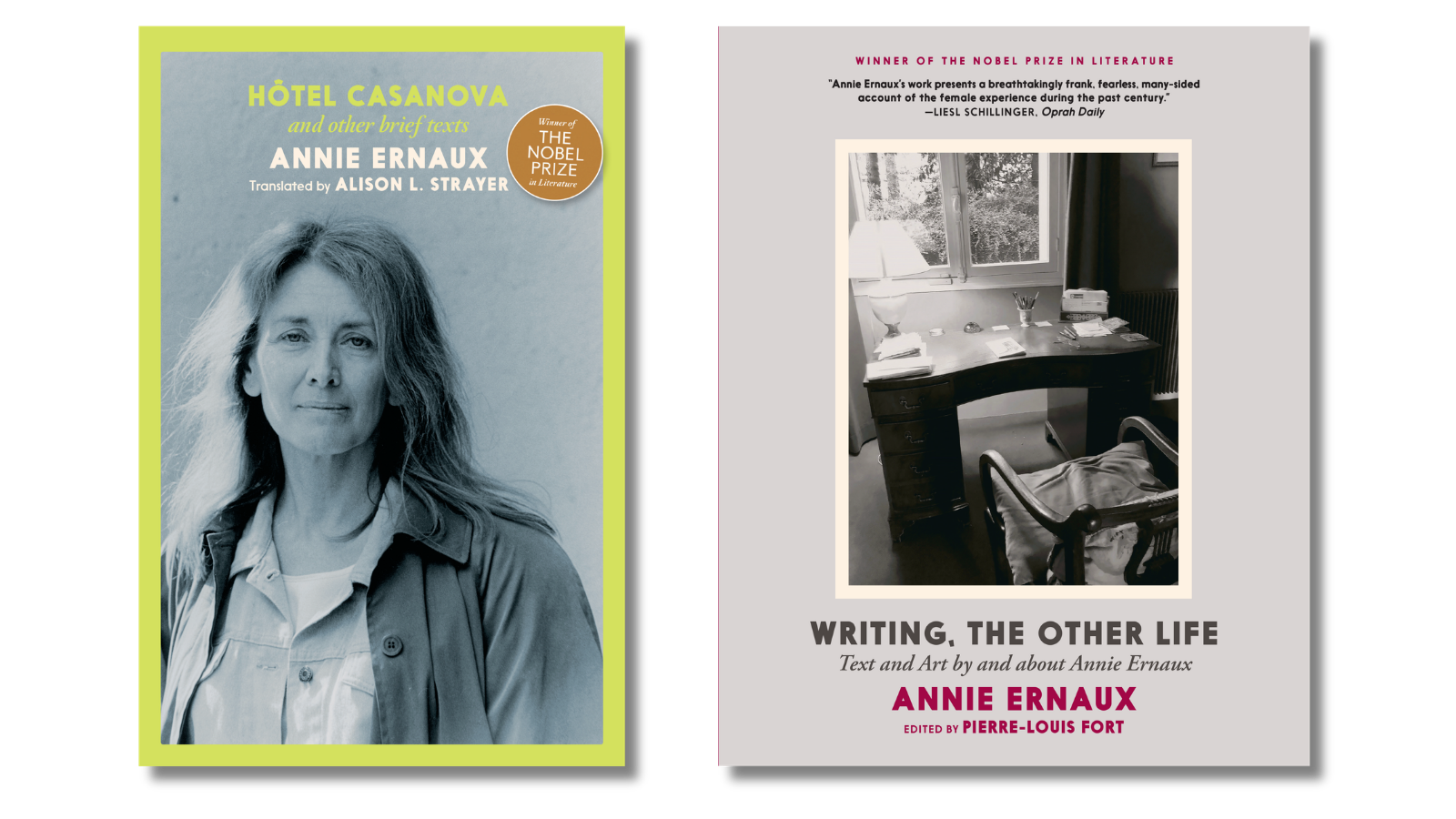
ON THE RETURN OF CHE'S REMAINS TO CUBA
An excerpt from Che, a Memoir by Fidel Castro
On our blog, a speech delivered by Fidel Castro on October 17, 1997, at the memorial honoring the return of Che’s remains to Cuba.
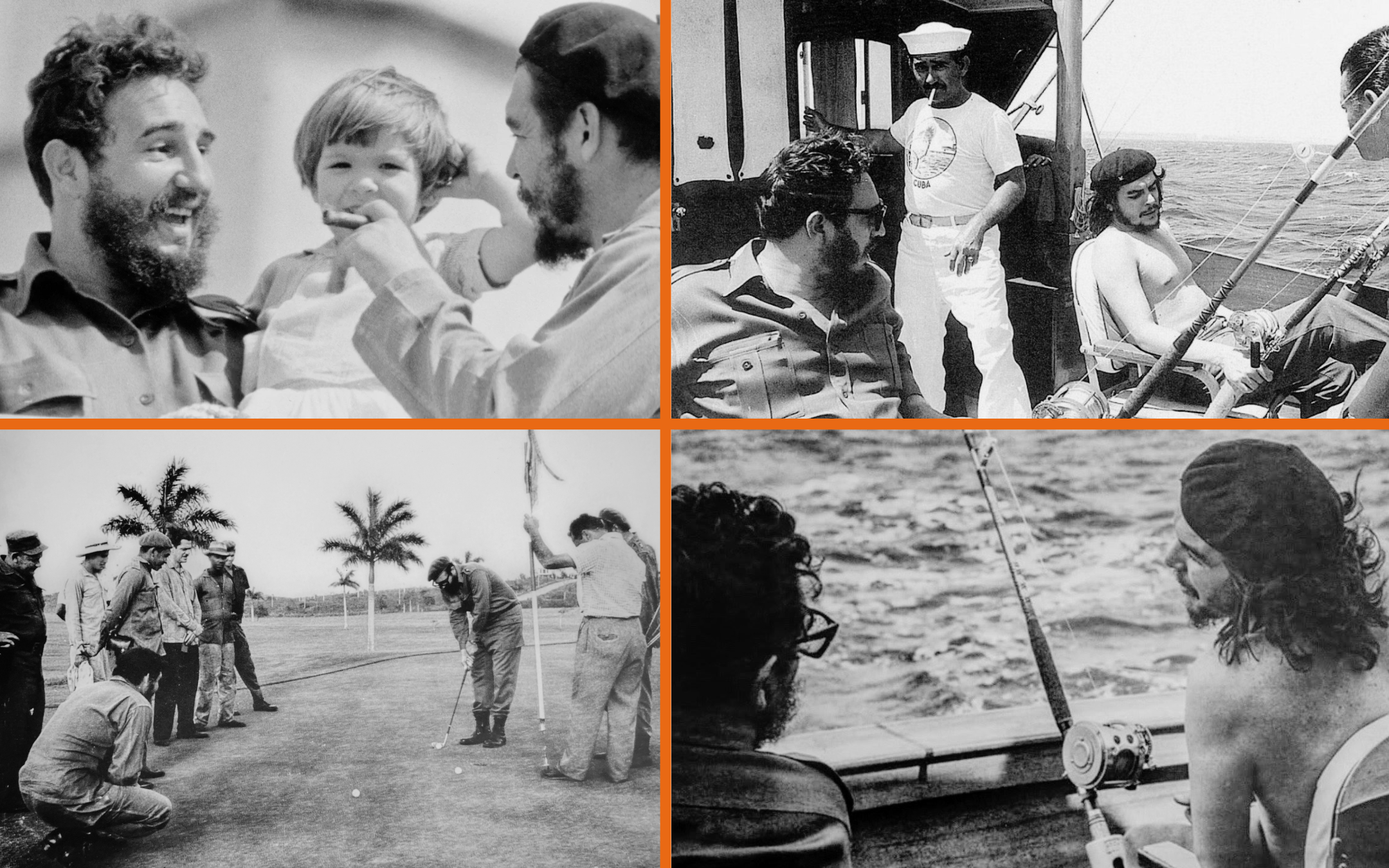
Remembering Linda Asher
(1932 - 2026)
A friend of Seven Stories, the descerning and hugely talented French translator Linda Asher, died on Tuesday, September 15, 2026.
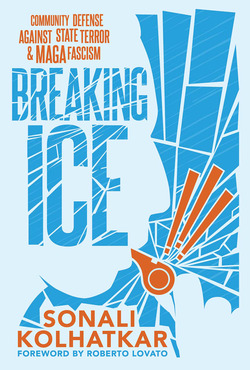
BREAKING ICE
A NEW BOOK BY SONALI KOLHATKAR
Featuring interviews with Pablo Alvarado, Ibram X. Kendi, Robin D. G. Kelley, Christine Neumann-Ortiz, Viet Thanh Nguyen, Favianna Rodriguez, Luis Rodriguez, Richard Wallace, Kent Wong, and many others.
Provincetown Seafood Cookbook
By Howard Mitcham
Intro by Anthony Bourdain
Provincetown's best-known and most-admired chef, Howard Mitcham, combines delectable recipes, cheery illustrations, and delightful folklore to serve up an iconic seafood cookbook.

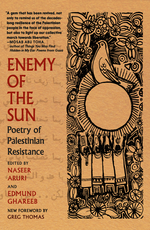
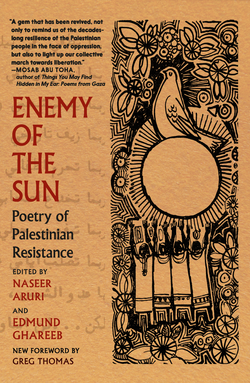
ENEMY OF THE SUN
POETRY OF PALESTINIAN RESISTANCE
Originally published in 1970 by the SNCC, this updated edition of Enemy of the Sun features new poems translated by Edmund Ghareeb and a new foreword by Dr. Greg Thomas.
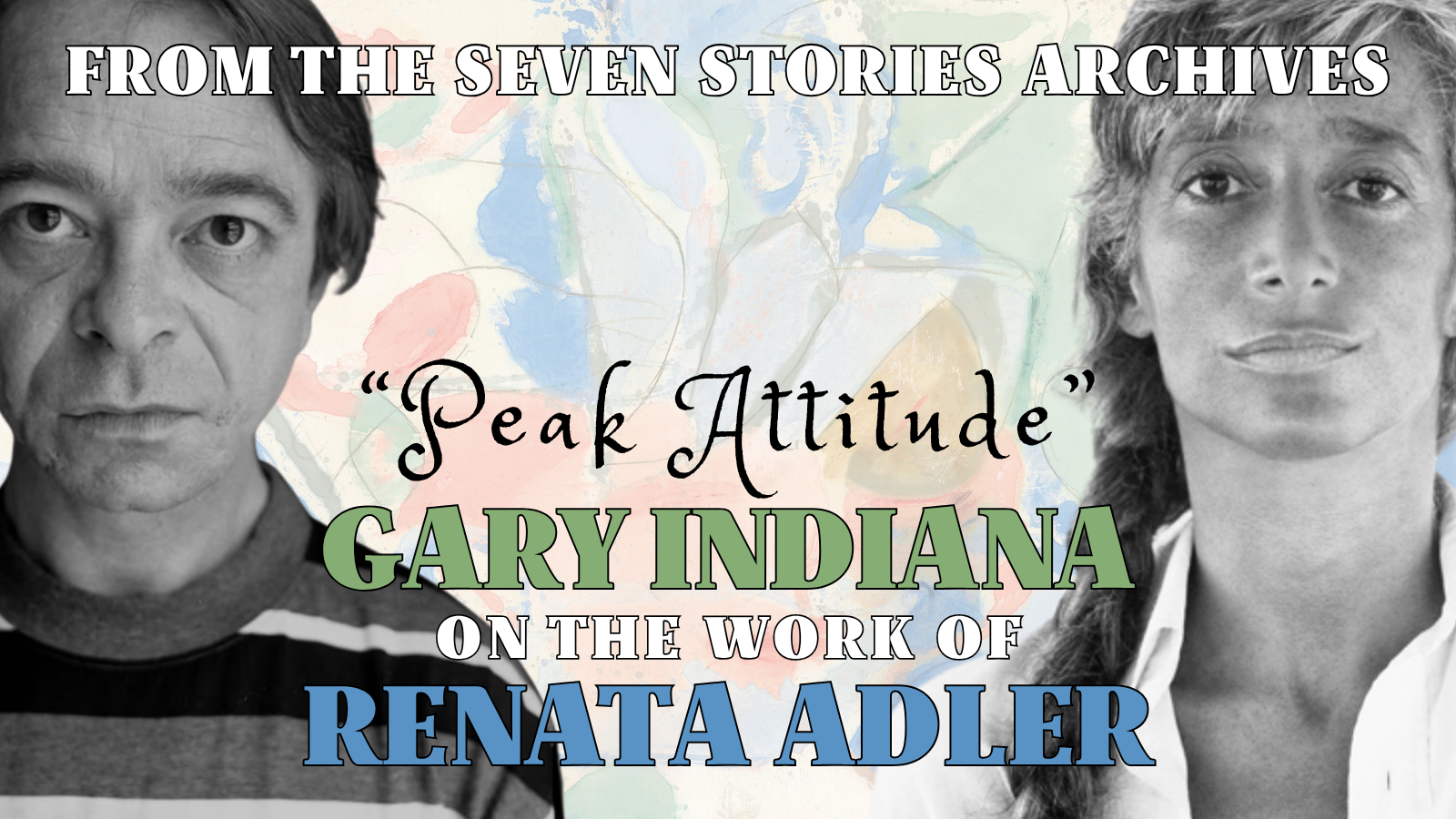
Peak Attitude:
The Novels of Renata Adler
By Gary Indiana
The Novels of Renata Adler
Novelist and critic Gary Indiana, born July 16, 1950, discusses the work of novelist and critic Renata Adler. Excerpted from Indiana’s 2022 collection Fire Season: Selected Essays, 1984-2021.
NEW WORKS OF THE RADICAL IMAGINATION
EXPLORE THE 2026 CATALOG FROM SEVEN STORIES PRESS
New and forthcoming books published by Seven Stories Press, Two Dollar Radio, and Triangle Square Books for Young Readers.
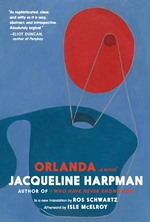
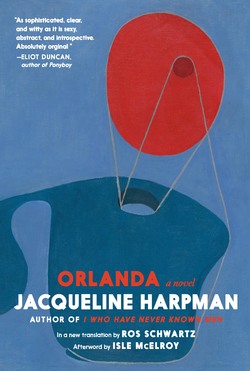
ORLANDA: A NOVEL
BY JACQUELINE HARPMAN
TRANSLATED BY ROS SCHWARTZ
BY JACQUELINE HARPMAN
TRANSLATED BY ROS SCHWARTZ
From the author of I Who Have Never Known Men, a groundbreaking novel about a woman whose mind splinters and finds itself in the body of a young man.
SAD TIGER
BY NEIGE SINNO, TR. NATASHA LEHRER
Winner of the the National Book Critics Circle's Gregg Barrios Prize for Books in Translation
Finalist for the National Book Award for Translated Literature

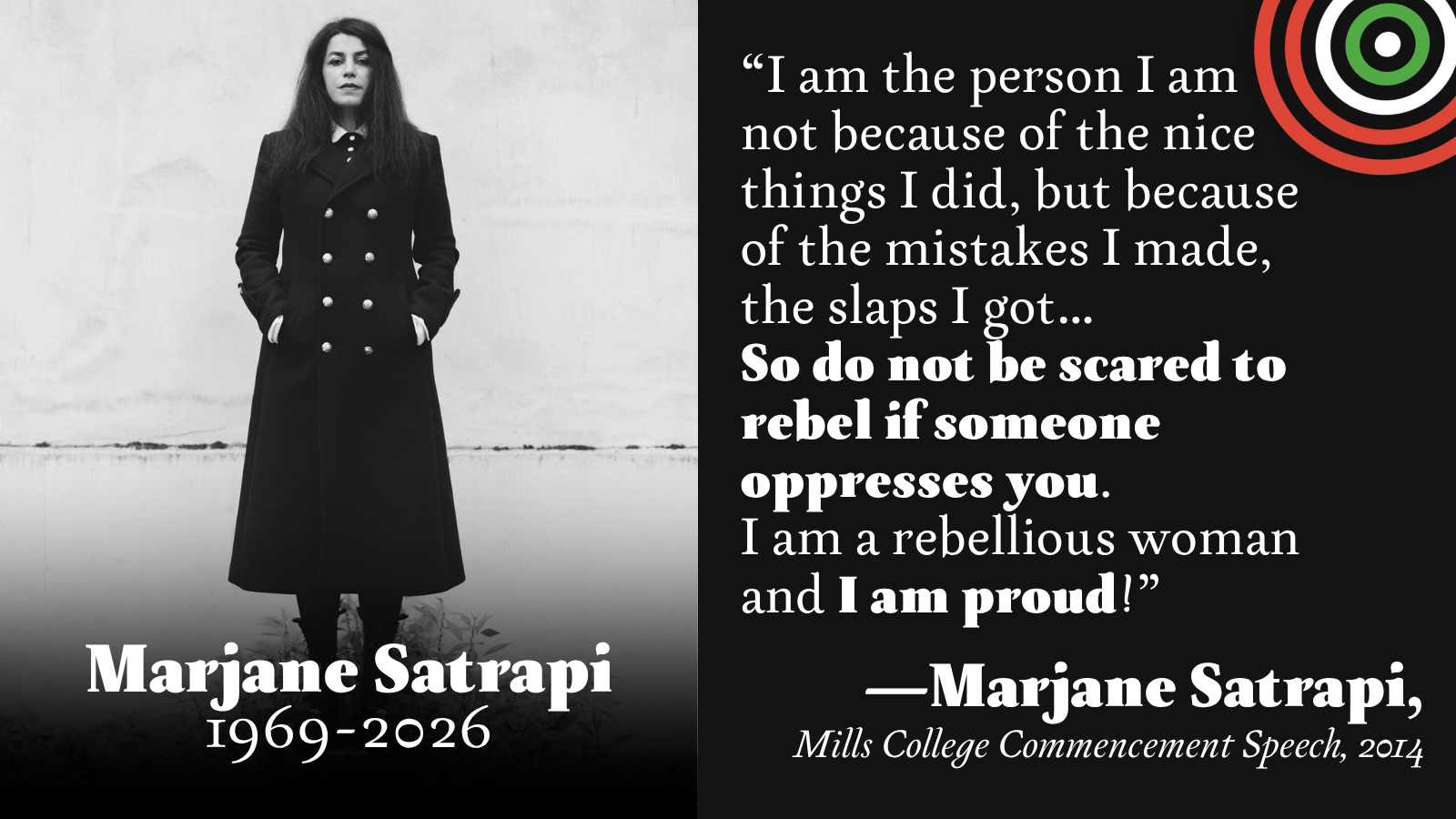
REMEMBERING MARJANE SATRAPI
(1969-2026)
(1969-2026)
You are missed and shall be remembered always.
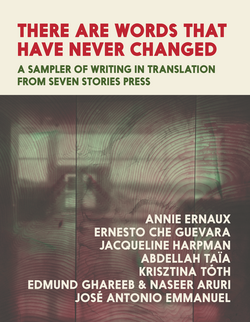
A FREE eBOOK SAMPLER OF LITERATURE IN TRANSLATION
Featuring prose by Annie Ernaux, Abdellah Taïa, Krisztina Tóth, Che Guevara, Jacqueline Harpman, and José Antonio Emmanuel, and poems by Rashed Hussein, Sameeh Al-qassem, Samar Najia, and Hend Judat.
Abolition is the only way forward
a reading list
a reading list
"Conventional wisdom would have one believe that it is insane to resist this, the mightiest of empires... [but] the greatest form of sanity that anyone can exercise is to resist that force that is trying to repress, oppress, and fight down the human spirit.” ―Mumia Abu-Jamal
A MAN WITHOUT A COUNTRY: 20th anniversary edition
BY KURT VONNEGUT
BY KURT VONNEGUT
“The America I loved still exists, if not in the White House, the Supreme Court, the Senate, the House of Representatives, or the media. The America I loved still exists at the front desks of our public libraries.”

ARE PRISONS OBSOLETE?
by Angela Y. Davis
What is prison abolition? In Are Prisons Obsolete?, Angela Y. Davis presents a compelling case for why we must immediately dismantle the prison industrial complex.

FREE U.S. SHIPPING ON ORDERS $25+

New and Forthcoming Books from Seven Stories Press
New releases and bestselling titles from Seven Stories Press.
Free shipping with orders $25+ and a free e-book bundle with every order.
“With the Smile of Saint-Just” by Annie Ernaux (1988)
Annie Ernaux in 1988. Image: Sophie Bassouls / Sygma
In following passage from Writing, The Other Life, excerpted below in full, 2022 Nobel Laureate Annie Ernaux offers her thoughts on the significance of the 1789 Revolution to her political awakening — and her continued political ideology. Relevant as ever, especially given the current uprisings in France (which Ernaux herself has participated in), this passage confirms Annie Ernaux as a writer of literature and a writer of the left, and the inextricable link between artistic practice and political practice.
With the Smile of Saint-Just, 1988
By Annie Ernaux
Translated by Frank Wynne
Excerpted from Writing, the Other Life: Text and art by and about Annie Ernaux
The French Revolution entered me when I was fifteen. It had the smile and the gentle face of Saint-Just, so handsome under his romantic black fedora, on the right-hand page of my ninth-grade history book. He was the man I would have chosen to initiate me into love, since I believed that the first revolutionary act of a young citizen was to lose her virginity. I found Robespierre more intimidating, but I admired him. If Saint-Just was the embodied beauty of the Revolution, Robespierre was its intelligence. For the verbal violence, for the rage I felt capable of and which I repressed, there was Hébert and his newspaper Le Père Duchesne. And that same name was also mine (before later I lost it); it was obvious that I was descended from the sans-culottes.
Even now, I feel sure I was “born” in 1789. The Ancien Régime inspires no dreams or desires in me. By an effort of will, I can understand its structure, admire the classical tragedy that is both its emanation and its apotheosis, but I am not of that world. Proust’s fascination with the Guermantes is, for me, the silent part of In Search of Lost Time. The only beauty I can find in this old world where, two centuries ago, in the 1780s, Marie-Antoine played at being a shepherdess while real peasants went hungry, is this: he is going to die and he doesn’t know it. Despite the warnings, and despite the cry of the prophetic philosopher Rousseau, “Man is born free, and everywhere he is in chains.” The Ancien Régime never spoke to me, in the literal sense of that phrase. Its vocabulary is, for example, “divine right,” “a man of quality” . . . The people are referred to as “the common herd” or “the rabble.” To me, the Ancien Régime is a dead letter.
It is during the Revolution that I hear these phrases spoken and blossoming, phrases whose meaning is formed as much in the chest, in the tightness of the throat, as in the mind, phrases that we feel as much as understand, especially when they resonate in a memory that has been humiliated. “Men are born and remain free and equal in rights.” Freedom, equality, justice, tolerance. And happiness, finally, in the here and now rather than the hereafter. Saint-Just’s admirable formula: “Happiness in Europe is a new idea.” Before words, there is nothing; to express things is to bring them into existence. The new world inaugurated by the Revolution is a world in which it is possible to think everything in terms of freedom, justice and happiness, and long for these values to be fulfilled. Afterwards, it becomes impossible to act as though these words were never spoken, as though the oath taken in Pontivy in June 1790, “Live free or die,” was not still carved on our walls.
It was during the Revolution that I see peasants and locksmiths, the chambermaids and the porters invade the space and time of history. The people no longer stay in their place, that fixed by birth and social status. They break down the doors and occupy places that are refused or denied them: Versailles, the Tuileries, the châteaux where the lord once greeted them (if indeed he greeted them at all) with a “ . . . and what do you want, my man?” The people come within reach of the king and queen, they touch them, not, as before, to be cured of scrofula, but to verify the simple humanity of these ancient sacred bodies. They now know that “The great appear great to us, only because we are on our knees” (resist the temptation to constantly quote the countless magnificent slogans that sprang up at the time). There is a painting by [Jacques-Louis] David depicting a woman of the Revolution. It’s called “La Maraîchère”—“The Market Gardener.” She is a woman with a weathered face, though probably still young. Her long black hair tumbles down her back, but is held in place by a headband. She stands very straight, forehead high, lips parted, unsmiling. What is most striking are her folded arms and her direct gaze, devoid of gentleness but also devoid of hatred, eyes that will no longer be lowered. This woman is the Revolution. (Rimbaud: “The people is no longer a whore.”)
In the history of France, I cannot think of an equivalent to the unprecedented undertaking of the revolutionaries of 1789. Since them, time has stood still. From universal suffrage to compulsory state education, from divorce to adopting the meter as a unit of length, nothing seems to be able to escape their desire to refashion the world. I see the most beautiful, the most insane symbol of this desire in the invention of the republican calendar. Changing time itself, obliterating past centuries! And counting the months and the days with the names of fruits and flowers, glorious names, clear or coppery, which smell of skin and sun: Floréal, Messidor, Vendémiaire. . . They were poets, too.
As you will have realized, the Revolution never left me. I forgot to say this: I discovered it at the same time as I discovered Rimbaud and the desire to love. It was like the same thing. Even today, I cannot tell the difference between literature, the coming revolution and love.
—Annie Ernaux, 1988
Excerpted from Writing, the Other Life: Text and art by and about Annie Ernaux, edited by Pierre-Louis Fort, featuring translations by Alison L. Strayer, Frank Wynne, Emma Ramadan, Ros Schwartz, Sophie Lewis, and Dan Simon
A stunning celebration of Annie Ernaux’s work, featuring interviews, critical analyses, and 24 unpublished writings that offer unprecedented insight into her life, writing style, thoughts, and influence.
Drawings, photos, handwritten manuscripts, and other visual materials make this a beautiful keepsake for new and longtime fans.
Magisterial in scope and size, Annie Ernaux: Writing, The Other Life was compiled and edited by Pierre-Louis Fort and was first published in France by Éditions de L’Herne in 2022, a few months before she received the Nobel Prize in Literature. The anthology includes twenty-four previously unpublished Ernaux pieces, as well as literary criticism, essays, interviews, diary entries, a song by Jeanne Cherhal, newspaper clippings, a comic strip by Aurélia Aurita, letters from Simone de Beauvoir.
Never before published in English, this beautifully visual collection includes an 8-page color photo insert with images, handwritten manuscript pages, and drawings sprinkled throughout. It is the fruit of collaboration between six celebrated translators and a groundbreaking work of scholarship and rumination.


